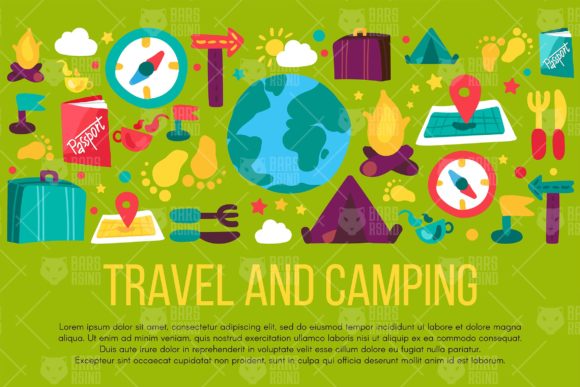
Travel and Camping Banner: A Strategic Design Asset for Creative and Commercial Use
The Travel and Camping Banner is a versatile design resource that combines vector-based illustrations with a hand-drawn, inspirational style. Featuring bright colors, cartoonish elements, and symbols of adventure, it serves as a powerful visual tool for creators, marketers, and entrepreneurs. This banner includes a range of file formats—AI, EPS, PNG, JPG—making it adaptable to various platforms and purposes. Whether used for branding, promotional materials, or creative projects, the Travel and Camping Banner offers a unique blend of aesthetics and functionality.
Strategic Value of the Travel and Camping Banner
At its core, the Travel and Camping Banner is more than just an artistic composition; it's a strategic asset that can enhance your creative output and business outcomes. The banner's imagery—such as footprints, compasses, tents, and maps—resonates with themes of exploration, freedom, and positive living. These visual cues can be leveraged to communicate brand values, evoke emotional responses, and align with target audiences who are passionate about travel, outdoor experiences, and lifestyle-oriented content.
For marketers, this banner can serve as a foundation for campaigns targeting adventure-seekers, eco-conscious travelers, or individuals interested in self-discovery. Its retro and hipster aesthetic also makes it ideal for niche markets or brands aiming to establish a unique identity. When used thoughtfully, the Travel and Camping Banner can support positioning strategies by reinforcing a brand’s commitment to exploration, authenticity, and fun.
Use Cases and Practical Applications
There are numerous scenarios where the Travel and Camping Banner can add value:
- Branding and Marketing Materials: Incorporate the banner into logos, social media visuals, website headers, or promotional posters. Its vibrant style and thematic elements make it especially effective for travel agencies, outdoor gear companies, and lifestyle blogs.
- Print and Merchandise Design: Use the banner as a base for T-shirts, mugs, stickers, or packaging. The cartoon-style illustrations are well-suited for youth-oriented or fun-focused products.
- Event and Festival Promotion: The banner’s upbeat tone and adventurous theme can be used to promote hiking events, camping trips, or travel expos.
- Content Creation: Bloggers and YouTubers can use the banner as a visual element in articles or videos about travel tips, hiking routes, or sustainable living.
- Interior and Environmental Design: The banner’s files can be adapted for wall art, murals, or digital signage in cafes, co-working spaces, or wellness centers focused on health and exploration.
Each use case requires a tailored approach. For example, when designing merchandise, consider how the banner’s elements can be simplified or stylized to fit the product’s size and purpose. When using it for branding, ensure consistency with other visual assets to maintain a cohesive identity.
Planning and Implementation Strategy
Before relying on the Travel and Camping Banner, it’s important to define clear goals. Ask yourself: What message do I want to convey? Who is my audience? How will this banner support my overall strategy?
Begin by identifying the primary objective—whether it's to attract attention, reinforce a brand’s personality, or drive engagement. Once you have a clear direction, evaluate how the banner’s elements align with your needs. For instance, if your goal is to promote a new line of camping gear, focus on symbols like tents, backpacks, and campfires to create a strong visual narrative.
Consider the platform or medium where the banner will be used. High-resolution PNG and JPG files are suitable for print or digital ads, while AI and EPS files allow for customization and scalability in graphic design software like Adobe Illustrator. Always test the banner across different formats and sizes to ensure it maintains quality and clarity.
Risks and Considerations
While the Travel and Camping Banner offers many benefits, there are potential risks if it’s not used intentionally. Overuse or misalignment with brand messaging can dilute its impact. For example, using the banner in a context that doesn’t match its adventurous and positive tone may confuse or alienate the audience.
Another risk is relying on the banner without considering its cultural or contextual relevance. While the cartoon style is universally appealing, certain symbols (like passports or flags) may carry different meanings depending on the region or demographic. Conducting market research or testing with a sample audience can help mitigate these risks.
Finally, avoid using the banner as a one-size-fits-all solution. It should complement—not overshadow—your other design elements. Ensure it integrates smoothly with typography, color schemes, and layout structures to maintain a balanced and professional appearance.
Decision-Making and Long-Term Value
Incorporating the Travel and Camping Banner into your creative or commercial strategy requires careful planning and execution. Think beyond immediate use and consider its long-term value. Will this banner support ongoing campaigns or future product lines? Can it be adapted for evolving brand identities or seasonal promotions?
One practical tip is to build a library of variations based on the original banner. For example, create versions with different color palettes, simplified elements, or localized themes to maximize flexibility. This approach ensures that the banner remains relevant and useful over time.
Additionally, track the performance of any campaign or project that uses the banner. Analyze metrics such as engagement rates, click-through rates, or sales conversions to assess its effectiveness. This data can guide future decisions and help refine your approach.
Ultimately, the Travel and Camping Banner is most valuable when used with intention, clarity, and alignment to your broader goals. By understanding its strengths and limitations, you can harness its power to achieve meaningful results in both creative and commercial contexts.